

the red string theory
have you ever wondered about the person on the other end of your string?

━─━────༺༻────━─━
I like to think the red string doesn’t announce itself. It doesn’t glow or pull or make itself obvious in the way stories often demand (or at least the ones I’ve read and heard here and there). It just exists — quiet, almost unnoticeable — looped around people who are moving through their lives, convinced they’re alone in their wanting. That’s what makes it believable to me. If destiny were loud, we would’ve heard it by now. Instead, it moves subtly, through missed timings and half-formed connections, through people who brush past each other without realizing how close they are to something that will eventually matter. Sometimes I wonder if we’ve already passed the people we’re tied to — on a staircase, in a crowd, in a room where nothing happened because it wasn’t meant to yet.
The red string doesn’t shorten the distance on command. It doesn’t hurry when we’re impatient or tighten just because we’re lonely. If anything, it seems to respond to readiness rather than desire. There are moments when it feels like the space between two people expands instead of closes, not as a punishment but as a delay — like the string loosening slightly, allowing both ends to move further apart so they can grow into something capable of holding the connection when the time finally comes. Other times, without warning, the distance shrinks. You find yourself circling closer to someone without quite knowing why, drawn into the same places, the same conversations, the same emotional frequency, until proximity feels less like coincidence and more like inevitability.
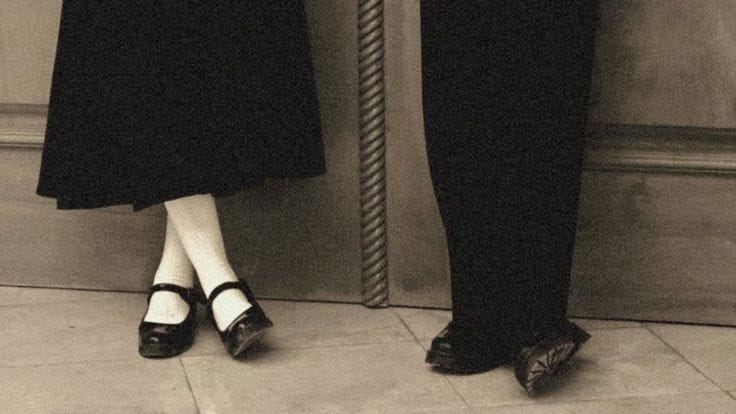
What comforts me most about the theory is that it reframes timing as intentional rather than cruel. Not meeting someone yet doesn’t mean you’re behind. It doesn’t mean you missed something. It just means the string is doing what it has always done — adjusting length, testing tension, making sure neither person has to contort themselves to make the connection work. I like believing that some people are kept apart precisely because meeting too early would fracture what could otherwise last.
The red string also removes the pressure to perform on the way there. In a world that rewards effort so publicly — where we’re encouraged to explain ourselves, curate ourselves, soften or sharpen parts of who we are depending on the room — the idea that someone might recognize you without needing to be convinced feels almost radical. The string doesn’t care how articulate you are, or how interesting you can make yourself sound, or whether you know the right things to say at the right time. It doesn’t respond to impressing. It responds to truth. If the string is real, then what’s meant to find you will do so even when you’re quiet, even when you’re unremarkable, even when you’re just existing.
There’s something deeply reassuring about the belief that certain connections don’t require strategy. That you don’t have to make yourself louder or brighter or more palatable to earn them. That you don’t have to audition your personality or narrate your worth in bullet points. The string doesn’t tighten because you try harder; it tightens because you’re aligned — because who you are and who the other person is can finally coexist without friction. That makes patience feel less like waiting and more like trust.
I don’t believe the red string eliminates loneliness. If anything, it coexists with it. You can feel deeply alone and still be bound to someone you haven’t met yet, or haven’t met properly, or haven’t met again. The string doesn’t rush to rescue you from that waiting. It lets you sit in it. It lets you become yourself there. And maybe that’s the point — maybe the waiting is not a punishment but a preparation. Maybe every version of you that feels unfinished is still necessary before the string can pull without snapping.
I also don’t think the string guarantees permanence. Some connections are meant to cross your life like a seam rather than a foundation. They change the shape of you without staying forever. The string holds long enough for something to be exchanged — perspective, softness, courage, clarity — and then loosens. That doesn’t make it meaningless. It makes it precise. Not every tie is meant to be tightened indefinitely, but each one leaves a subtle mark where it once was.
Believing in the red string has changed how I interpret rejection. Not in a dismissive way, but in a gentler one. When something doesn’t stay, I no longer feel the immediate urge to dissect myself for errors. I don’t assume I failed some invisible test. I can let the loss exist without turning it into proof of insufficiency. If the string was never there, then forcing the connection would have only taught me how to abandon myself in the process. Distance, in that sense, becomes information — not rejection, just redirection.
I don’t think we meet the person tied to us while we’re still negotiating with ourselves. There’s a sense that the string waits until certain lessons have been lived rather than learned intellectually. Until disappointment has been metabolized instead of avoided. Until loneliness no longer feels like an emergency. I believe there are versions of us that would mishandle the meeting — either clinging too tightly, or mistaking recognition for rescue. So the string keeps its distance while we move through the necessary fractures: the friendships that fall apart, the wanting that isn’t returned, the quiet recalibration of expectations. Readiness, to me, isn’t perfection — it’s the moment when connection stops being a way to escape yourself and starts becoming a way to meet another person honestly.
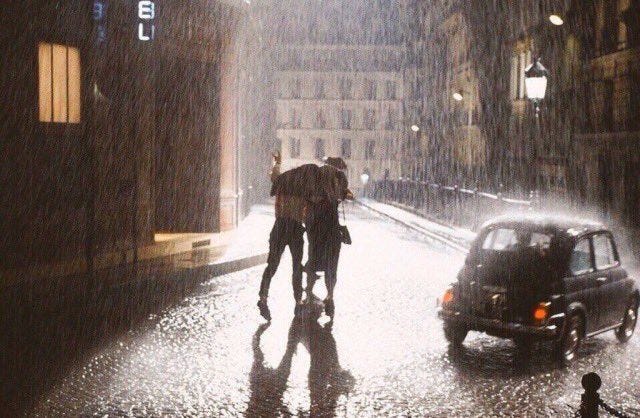
Sometimes I imagine the obstacles not as detours, but as precise shaping. Every disappointment sanding down a sharp edge. Every period of solitude widening our capacity to sit with another person without needing to be filled. I like to believe that when the meeting finally happens, it will feel strangely undramatic — not cinematic, not explosive — but calm, as if something long familiar has stepped into visibility. As though both ends of the string have already learned how to hold tension without pulling, how to stay intact without unraveling. And maybe that’s why the waiting matters so much: because the meeting isn’t just about finding each other — it’s about being able to stay.
I also imagine the string stretching and contracting as people grow. How it might pull two people closer once they’ve learned how to be alone without bitterness, how it might slacken when one is still trying to be chosen rather than simply be. I like thinking that the string knows when closeness would heal and when it would harm. That it doesn’t confuse intensity for readiness.
And maybe that’s the quiet lesson threaded through all of this: that what is meant for you does not require you to betray yourself to keep it. You don’t have to become smaller or louder or more impressive to deserve it. You don’t have to translate yourself into something easier to consume. The string doesn’t attach to versions of you that are built out of fear. It attaches to who you are when you stop performing and start living.
I don’t know who my string is connected to. I don’t know whether we’ve already passed each other, or whether we’re still walking toward the same future from opposite ends. I don’t know how far apart we are right now — only that the distance means something. But one day, I think I’d like to know. Not because I need proof, but because it would be comforting to recognize the quiet persistence of something that was always there, holding, adjusting, waiting — until we were both ready to notice the pull.
━─━────༺༻────━─━
Thank you so much for taking the time to read this piece. I hope these words lingered with you, even a little, or offered a quiet comfort. —xoxo, vienna
You are such a talented writer!! I immediately subscribed. Can’t wait to read more of your work!!
gosh, your writing is so charming, vienna! there is so much to love about this piece and, while it's hard to pull out just one part of your prose, this part really spoke to me,
'Sometimes I wonder if we’ve already passed the people we’re tied to — on a staircase, in a crowd, in a room where nothing happened because it wasn’t meant to yet.'--beautiful!
i've long believed in the concept of divine timing, long trusted that my path will unravel in the way it was always meant to--and so, reading your beautiful thoughts on how people and experiences come to us in good time was an absolute pleasure <3